
Bulgaria's Anti-Euro Protests: Nationalism, Economic Concerns, and Political Tensions
Bulgaria is witnessing a wave of protests against its plans to adopt the euro, with thousands of demonstrators clashing with police in the capital, Sofia. The protests, largely driven by the ultra-nationalist Revival party, reflect deep-seated concerns over national sovereignty, economic stability, and the potential impact of transitioning from the Bulgarian lev to the euro.
Background of the Protests
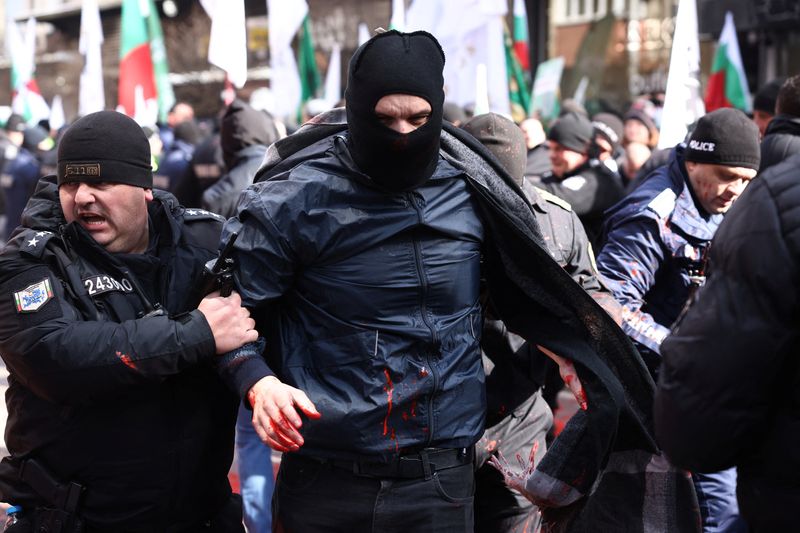
On Saturday, thousands of anti-government demonstrators gathered outside the European Union mission in Sofia, voicing their opposition to the euro adoption. Chanting slogans like "Resignation" and "No to the Euro," some protesters resorted to aggressive actions, including throwing firecrackers, Molotov cocktails, and red paint at the EU building. The situation escalated when they attempted to storm the building, setting its front door on fire before being pushed back by police.
The violence resulted in injuries to at least 10 police officers and led to the arrest of six individuals. In response, the Bulgarian government condemned the attack, stating that such actions were unacceptable and went against the rule of law.
Why Are Bulgarians Protesting?
The resistance to euro adoption is fueled by several key concerns:
- Loss of Financial Independence
Many Bulgarians fear that transitioning to the euro will erode the country's financial sovereignty. Revival party leader Kostadin Kostadinov has accused the government and the central bank of manipulating economic data to justify the change. "We don't want Bulgarian financial independence to be destroyed. We want to keep the Bulgarian lev," he stated during the protest. - Economic Uncertainty and Inflation Fears
A significant portion of the population is worried that the euro could trigger sharp price increases, similar to what happened in Croatia after its adoption of the currency in 2023. While the Bulgarian lev has been pegged to the euro for years, opponents argue that full integration into the eurozone could lead to economic instability. - Distrust in Government and EU PoliciesThe Revival party has long criticized Bulgaria’s growing integration with the European Union, arguing that it compromises national interests. Protesters waved Bulgarian, Soviet, and East German flags as a symbol of resistance against Western economic policies.
Government's Stance on Euro Adoption
Bulgaria’s new government, which took office after the country’s seventh election in four years, has reaffirmed its commitment to joining the eurozone. Prime Minister Rosen Zhelyazkov has set a target for adopting the euro on January 1, 2026, with the 2025 state budget designed to meet eurozone criteria, including maintaining a 3% deficit.
However, before Bulgaria can officially transition, it must meet the extended inflation target set by European regulators. This requirement has fueled skepticism among protesters, who accuse the government of manipulating economic indicators to accelerate euro adoption.
Potential Impact on Bulgaria's Economy
While critics fear inflation and loss of sovereignty, many economists argue that joining the eurozone could benefit Bulgaria in several ways:
- Increased Foreign Investment
Being part of the eurozone could attract more investors, as it removes currency exchange risks and enhances financial stability. - Lower Borrowing Costs
Bulgaria could receive improved credit ratings, making it cheaper for the country to secure loans and finance public projects. - Stronger Economic Integration
Joining the euro would further integrate Bulgaria into the EU’s economic framework, potentially boosting trade and employment opportunities.
Public Opinion and the Future of the Protests
Public opinion in Bulgaria remains divided. While the government insists that euro adoption will strengthen the economy, many citizens remain unconvinced. The protests highlight broader dissatisfaction with government policies and lingering nationalist sentiments.
As Bulgaria moves closer to the eurozone, the debate is likely to intensify. Will the government be able to convince the public of the euro's benefits, or will nationalist resistance continue to grow? The coming months will be crucial in determining the future of Bulgaria’s currency transition.

Ayzalme
Just a calm man, enthusiast for investing and technology.